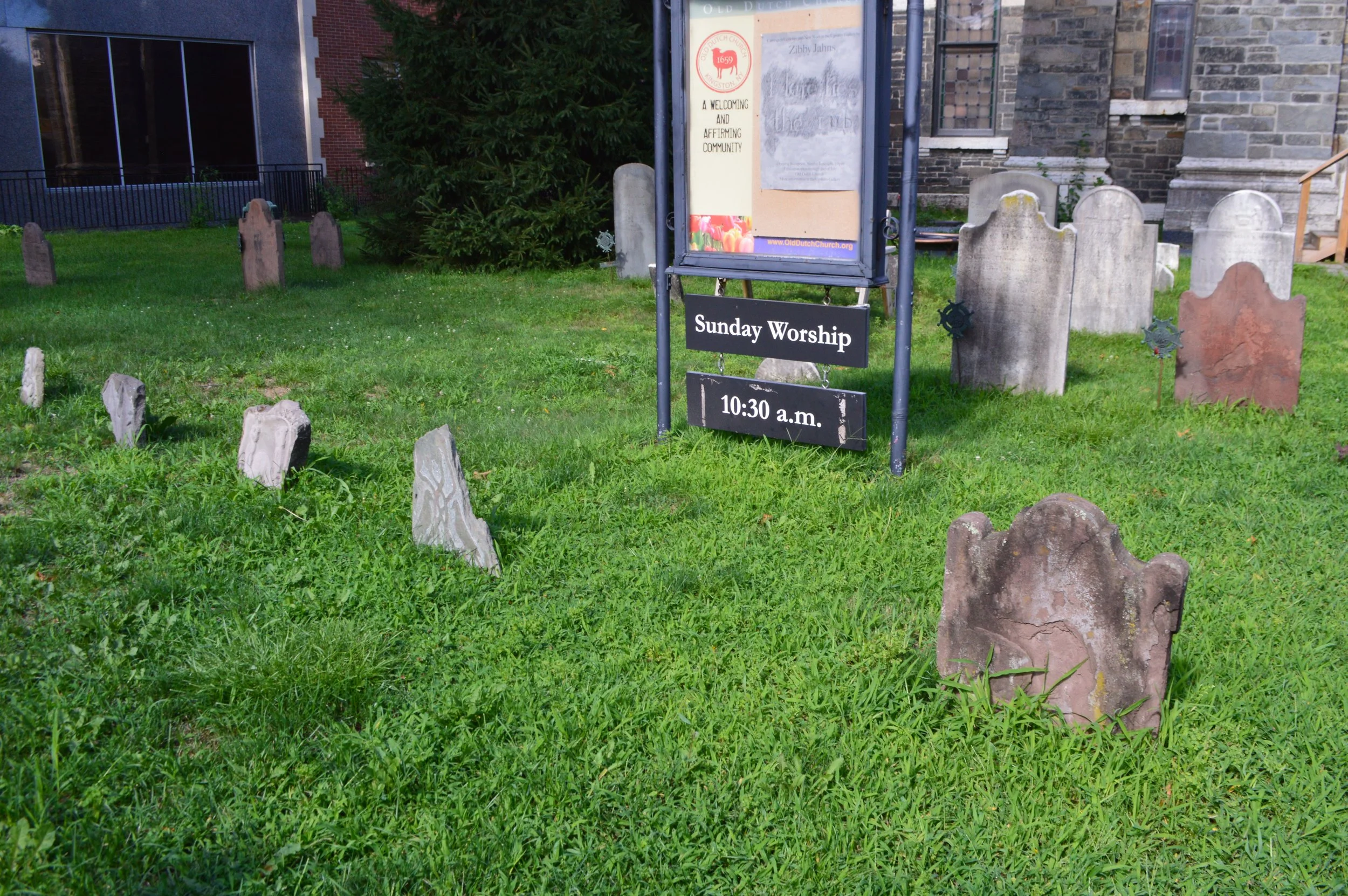
2026 Public Installation of bluestone carvings into the 17th century cemetery at Old Dutch Church in Kingston, NY
Cemeteries are for the living. Their nature implies that we don’t have access to what is below the surface. Lives are lost, bodies decompose, memories fade–all that remains for future generations are markings (if there ever were any), worn down over time or upended or penned into a book of records (maybe). Headstones give us a glimpse of all this; to make a rubbing of one is to trace the lines of excavation and create an impressionist imprint of a fixed history. And while cemeteries are utterly holy and hallowed ground, one could make an equally good argument for the hallowed dirt of all of nature. The divinity of life is proof of miracles beyond our wildest imagination.
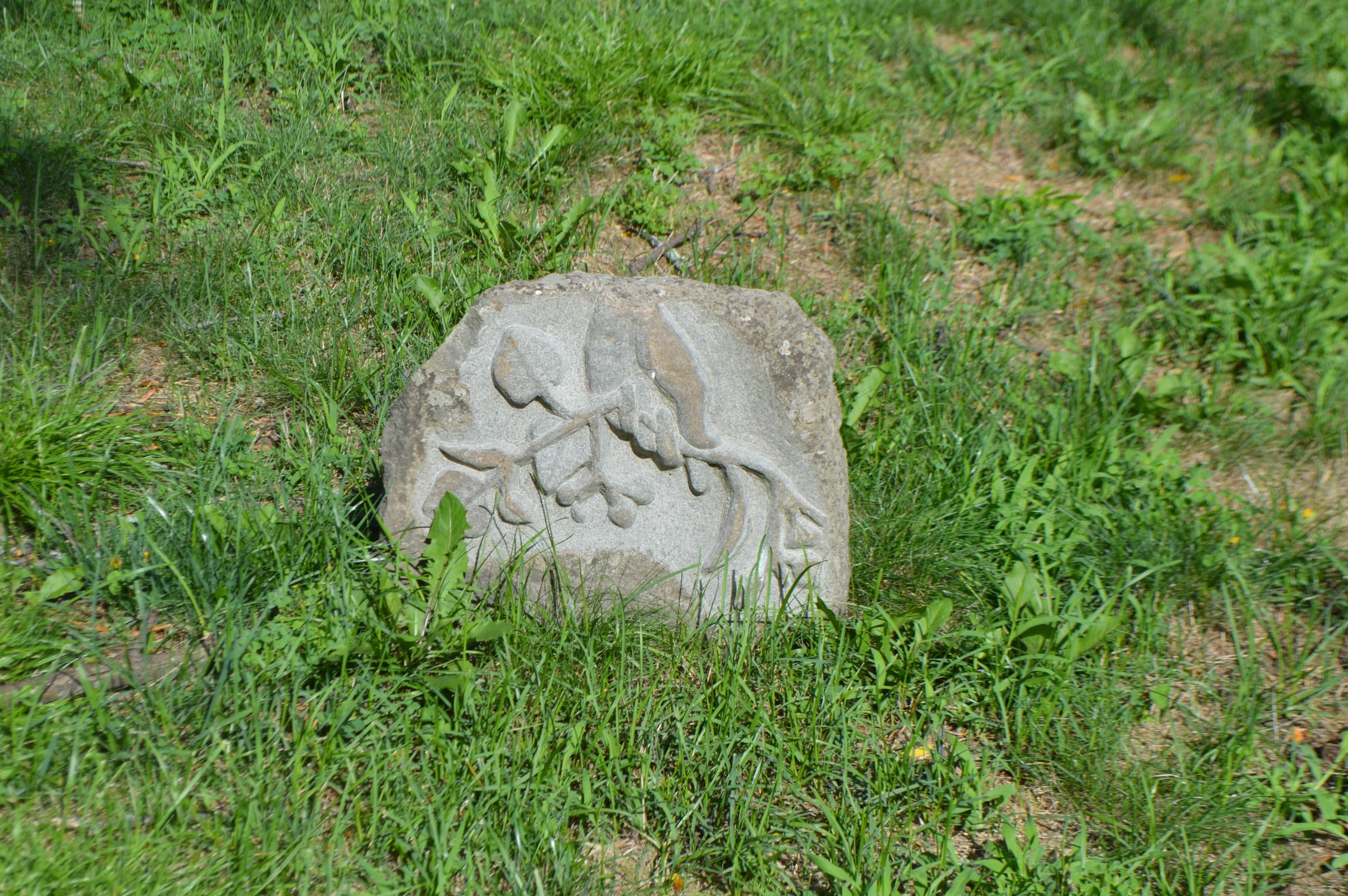
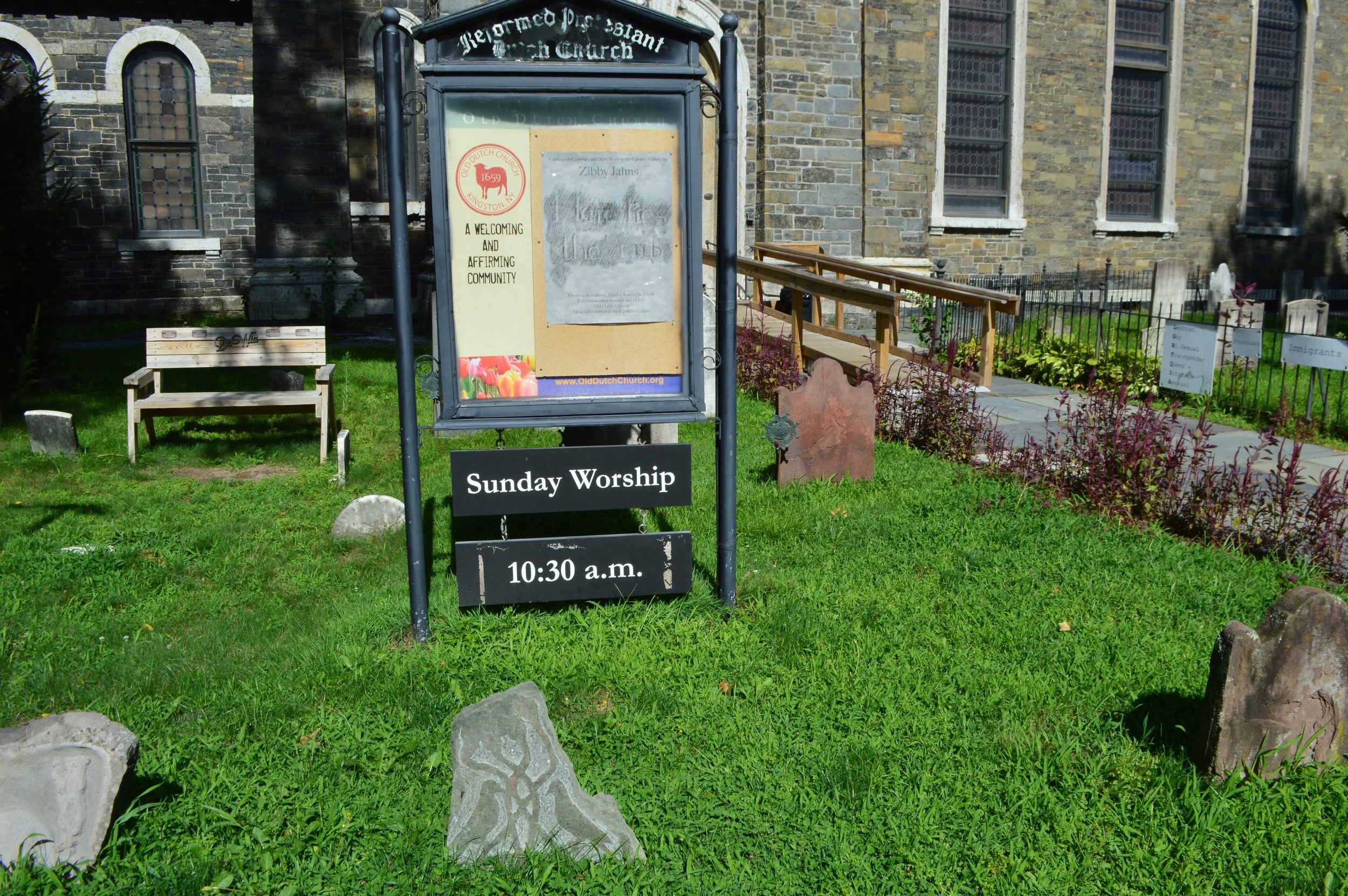
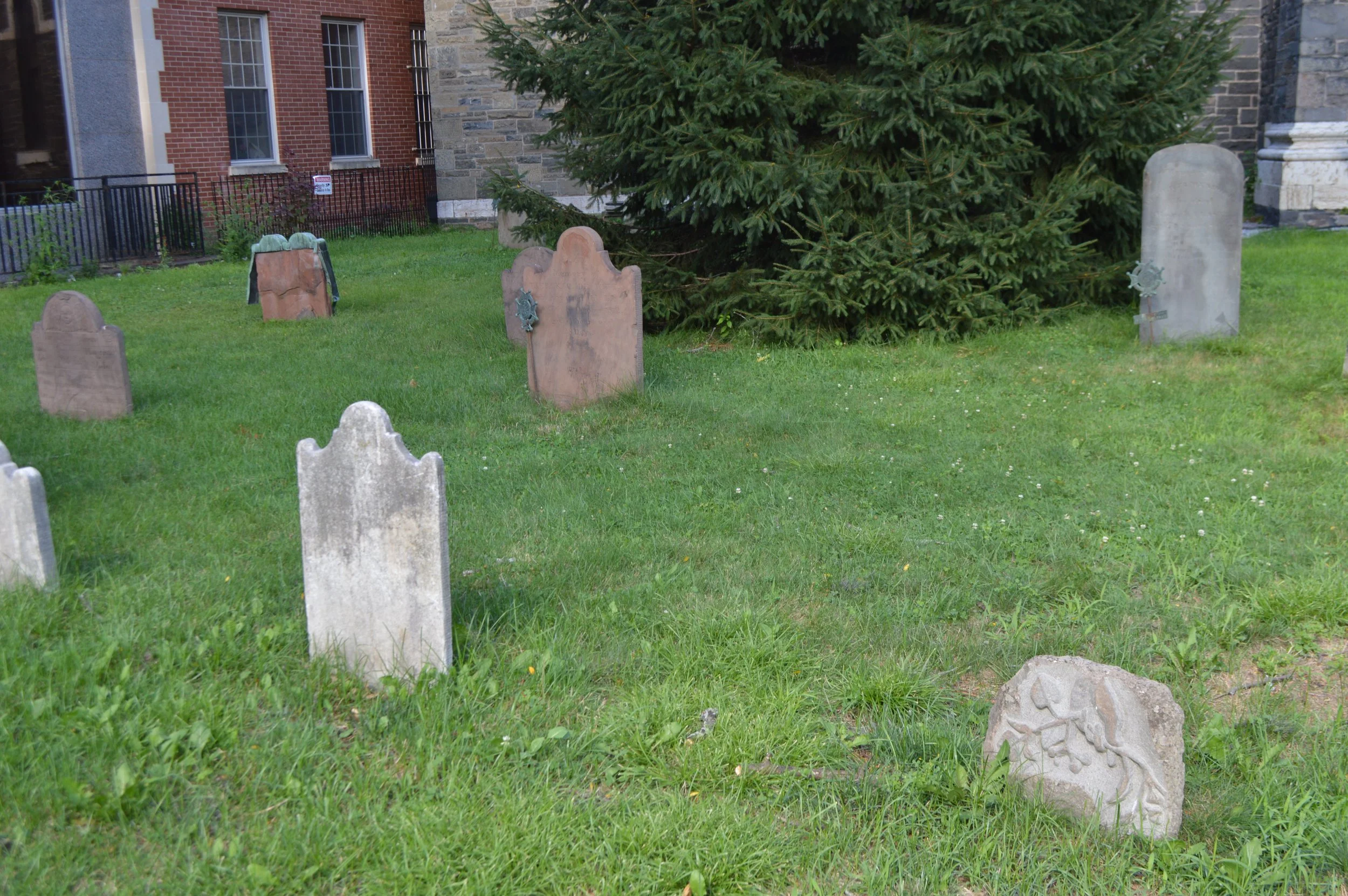
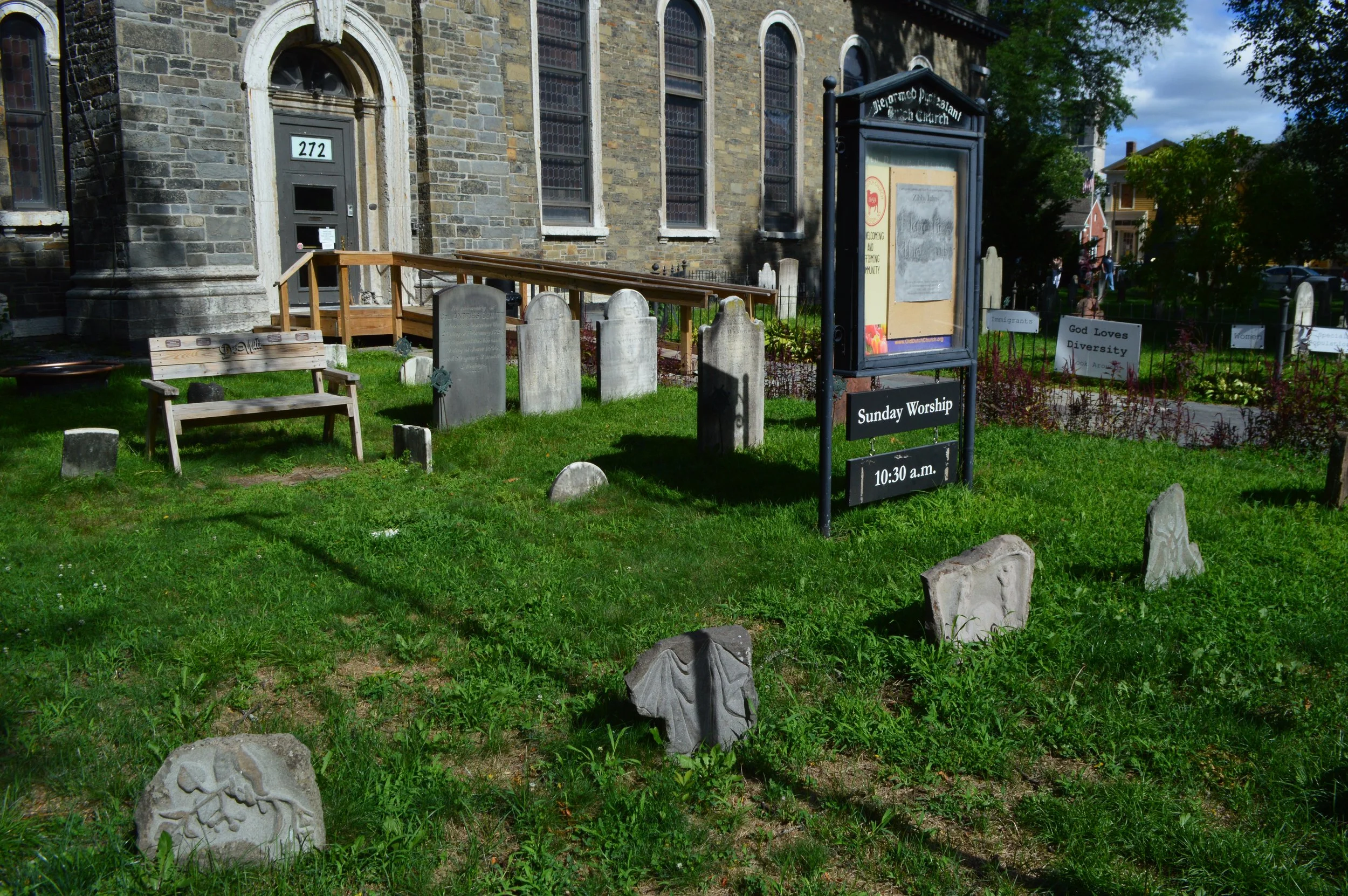
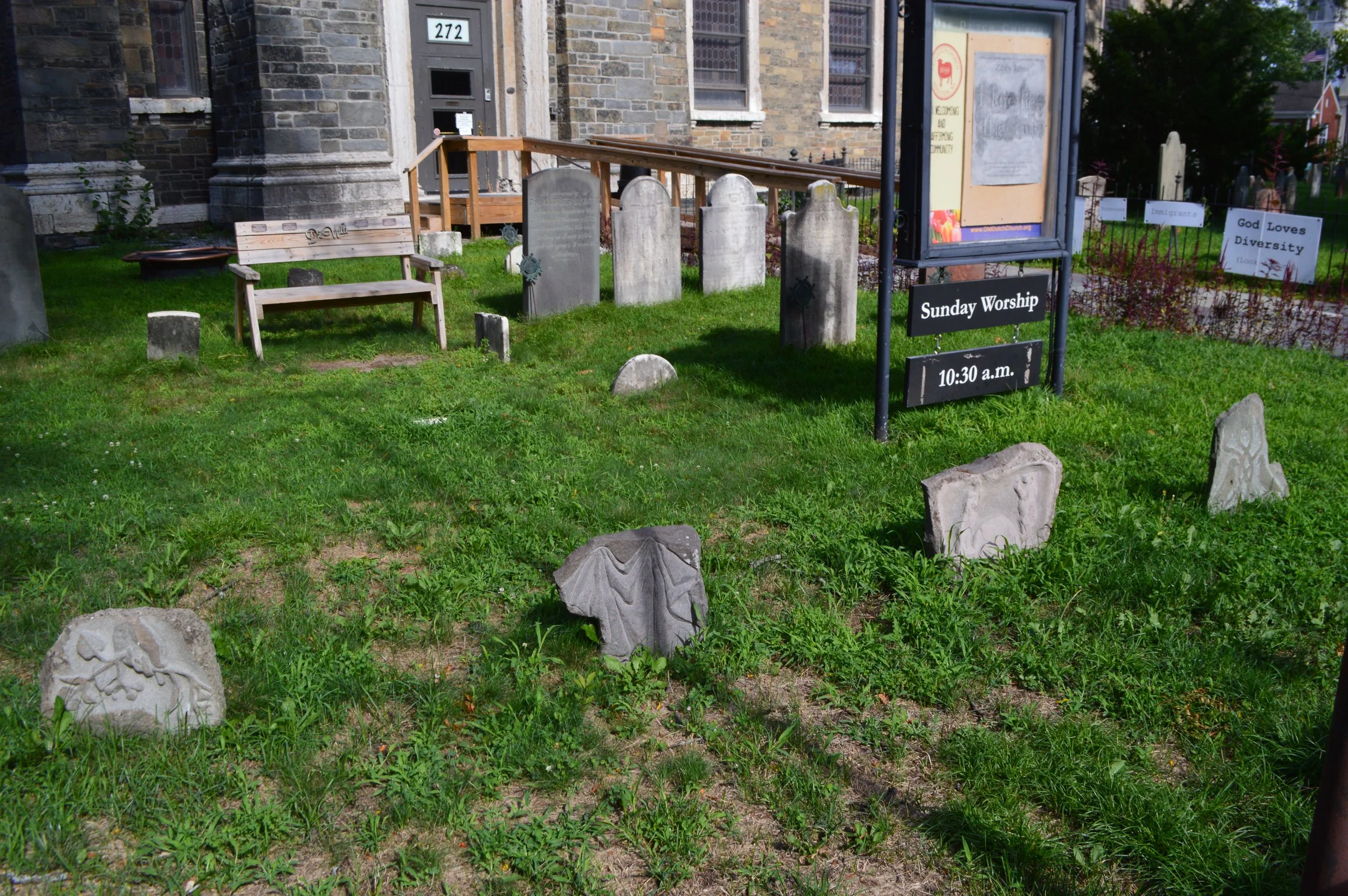
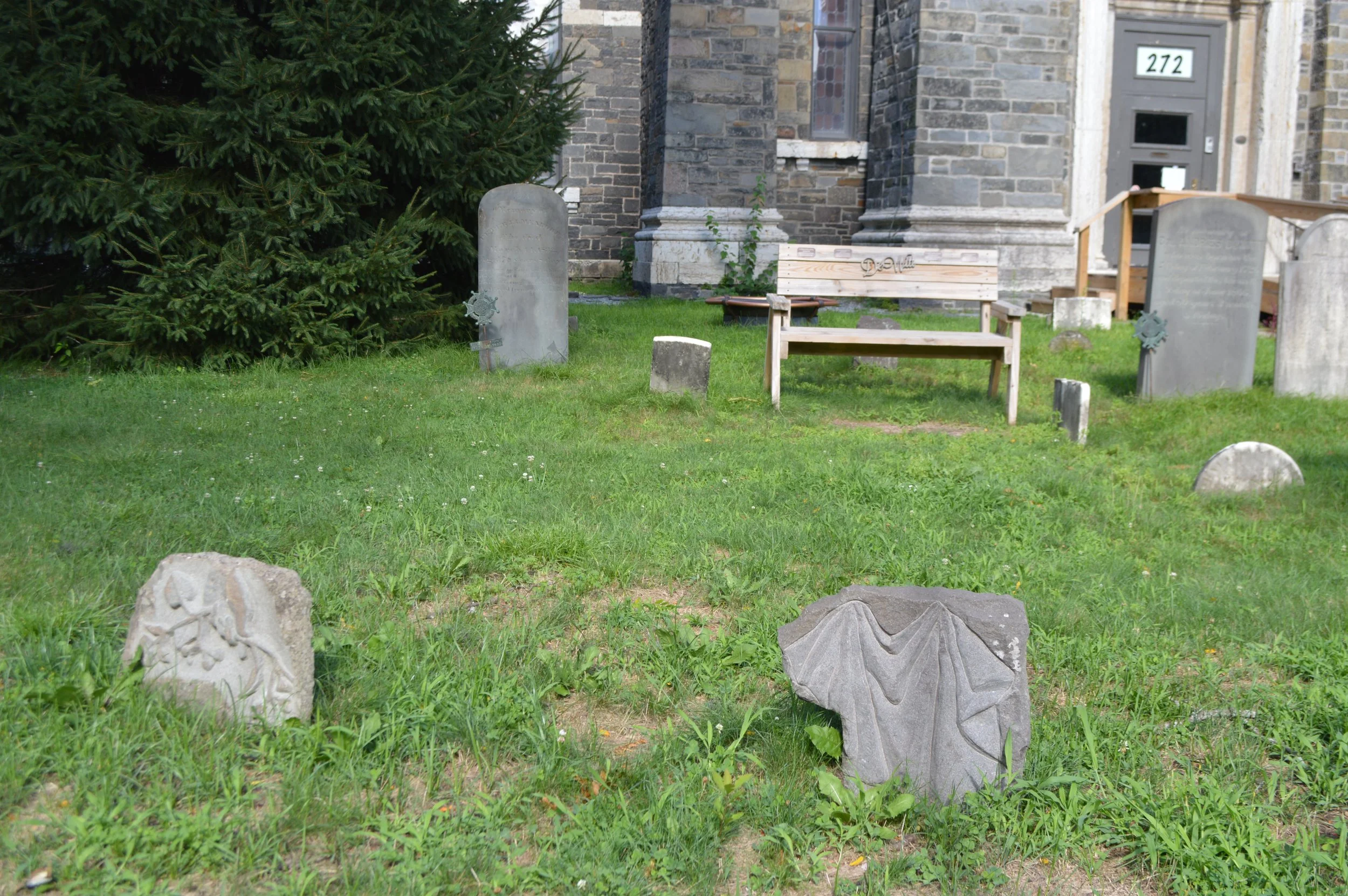
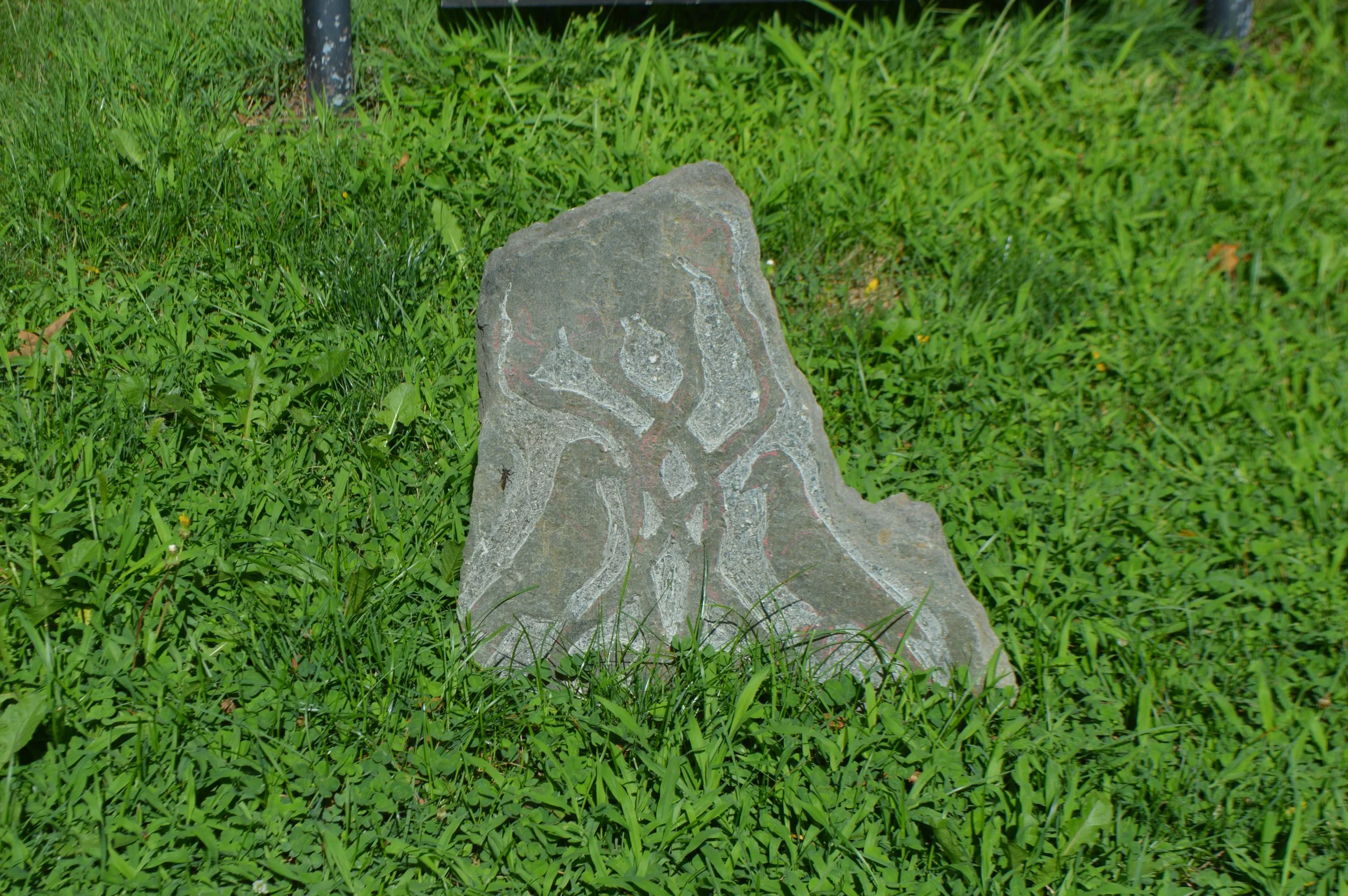
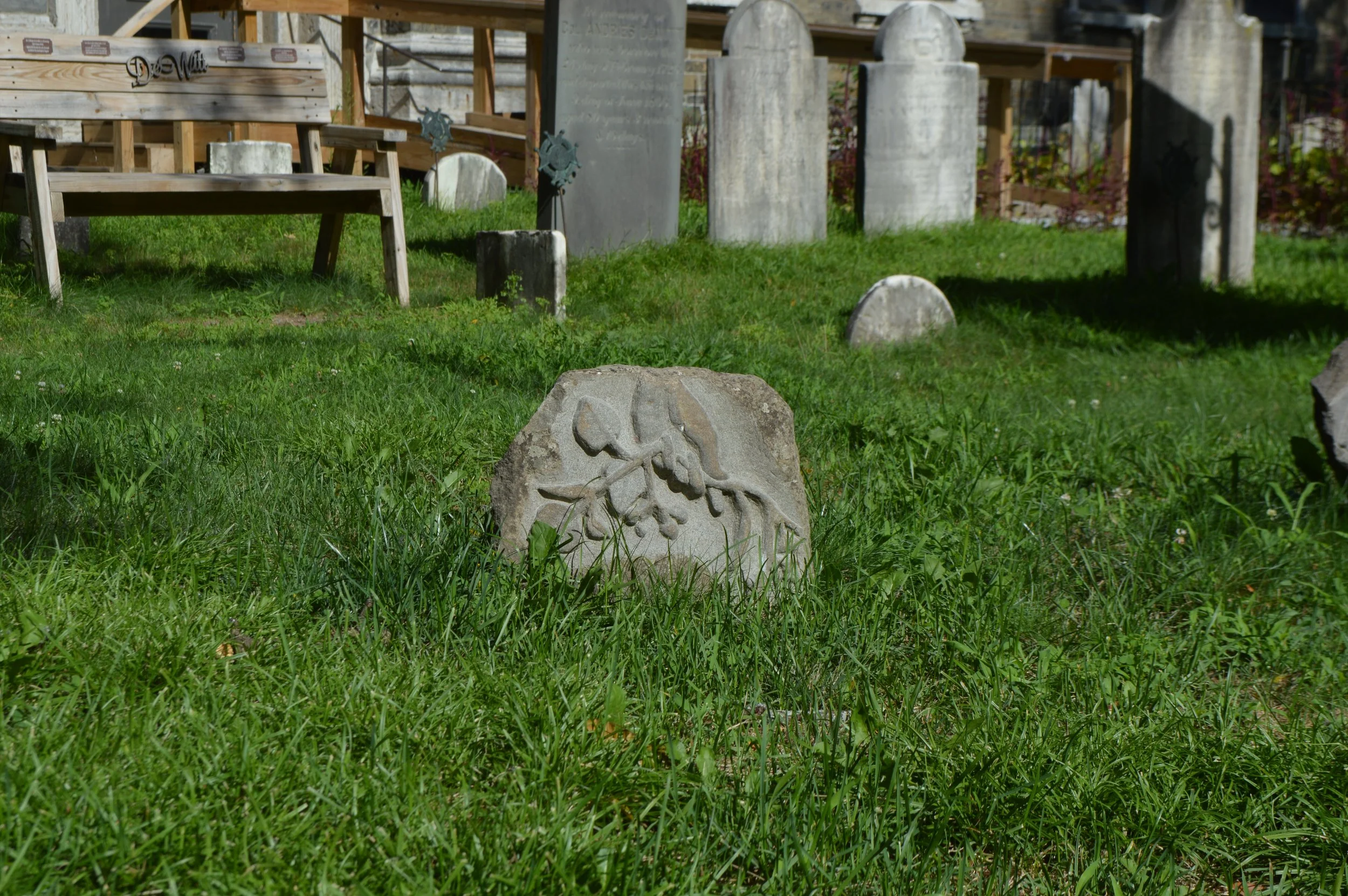
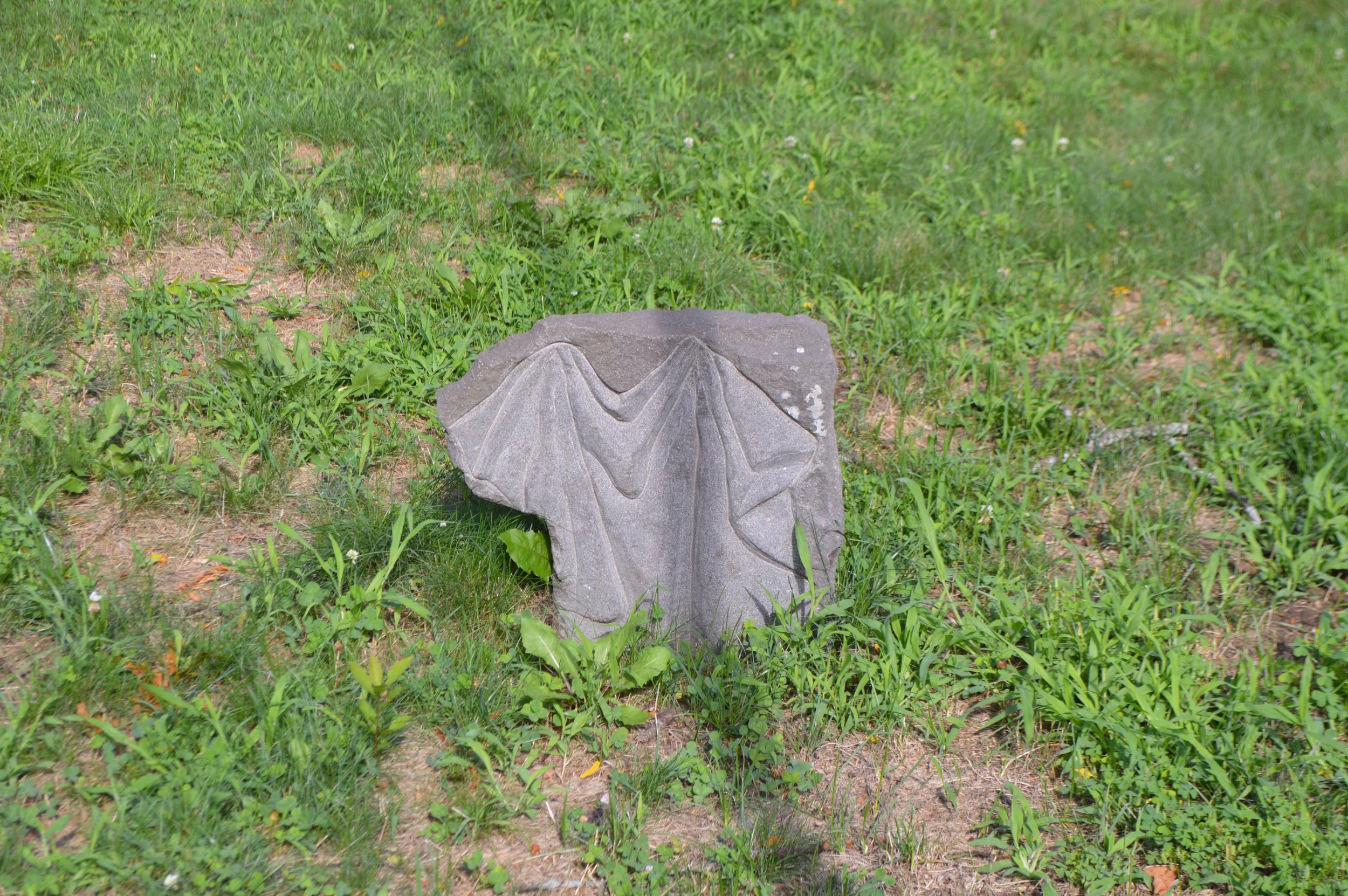
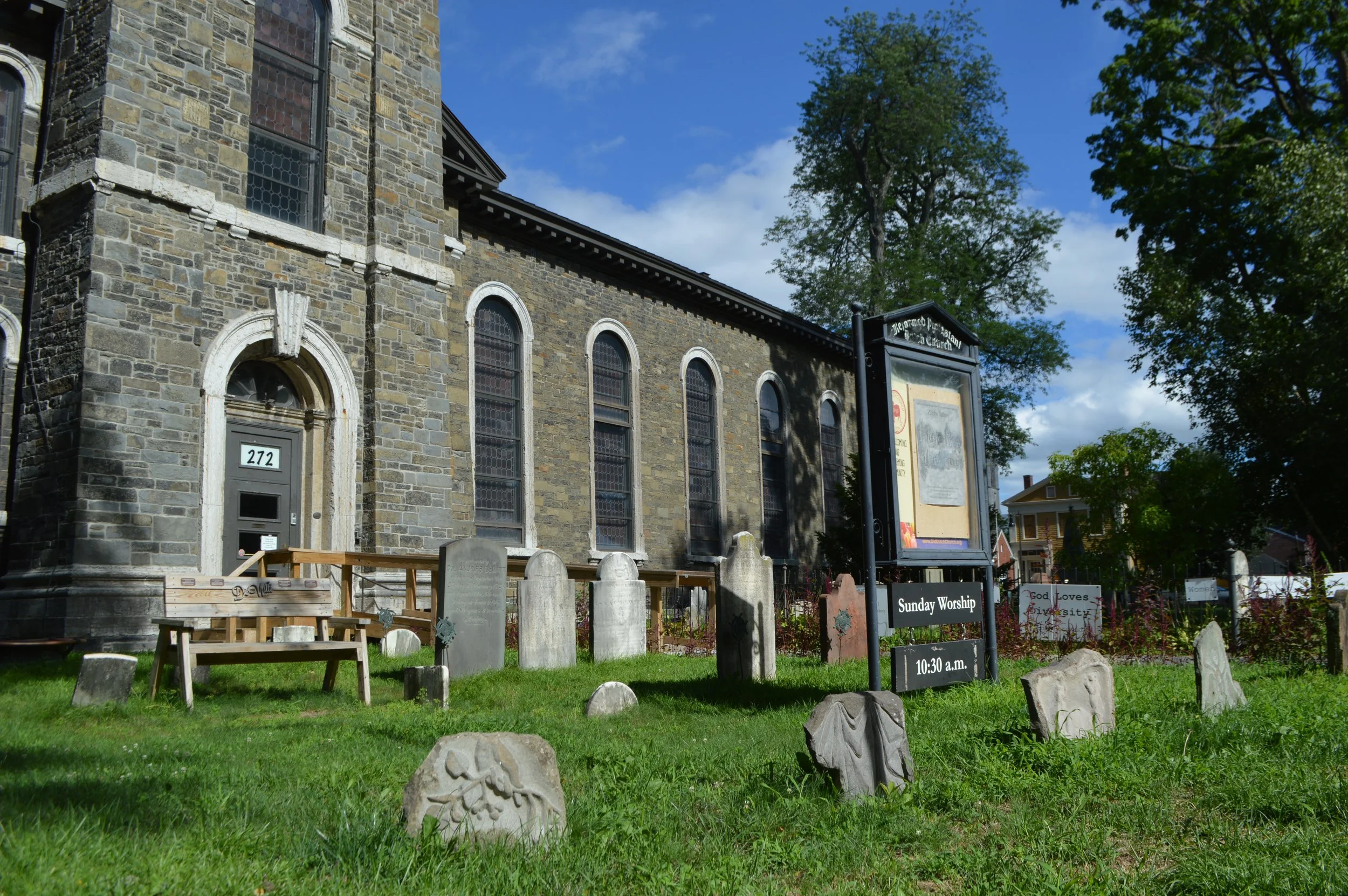
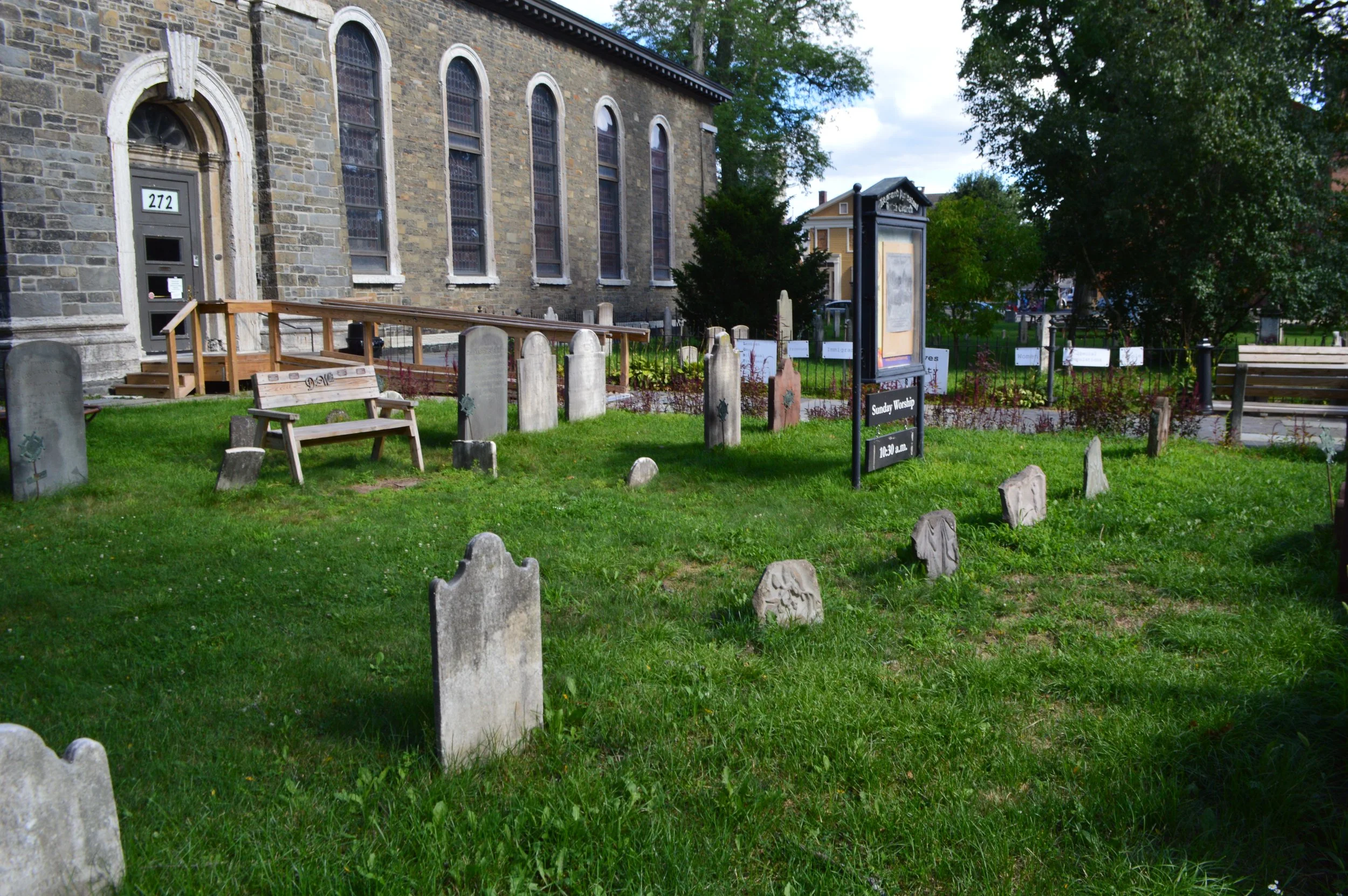
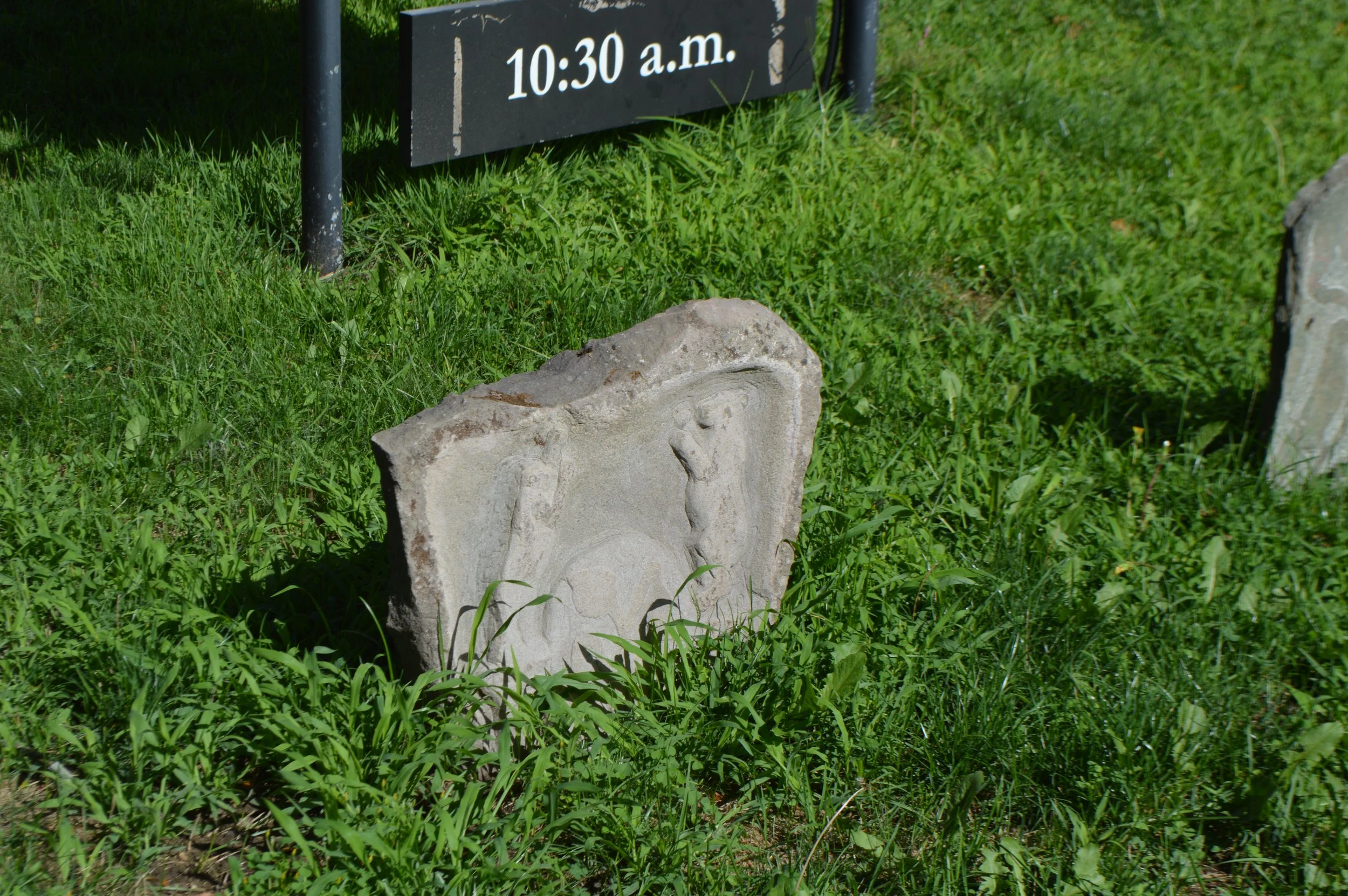
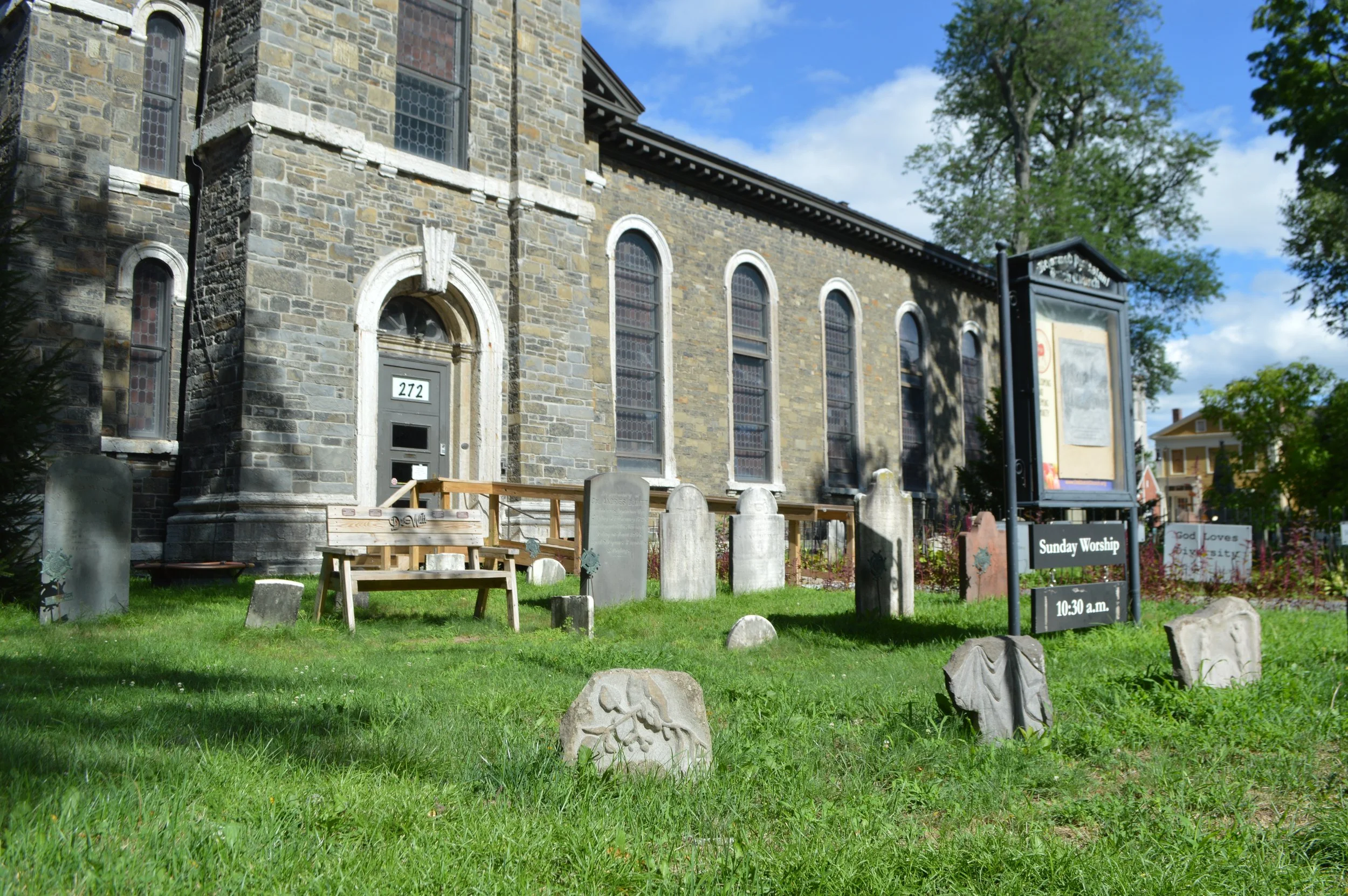
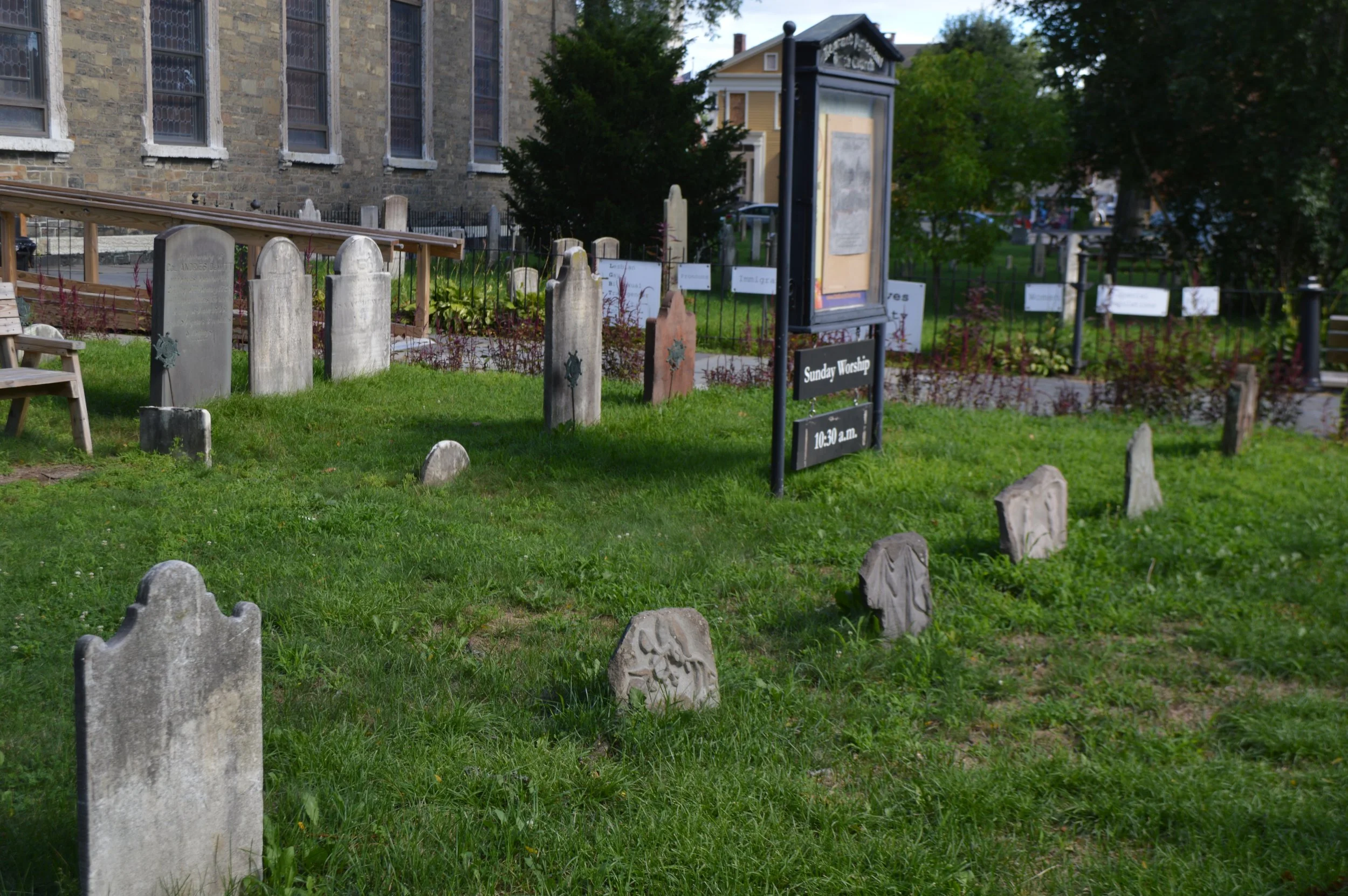
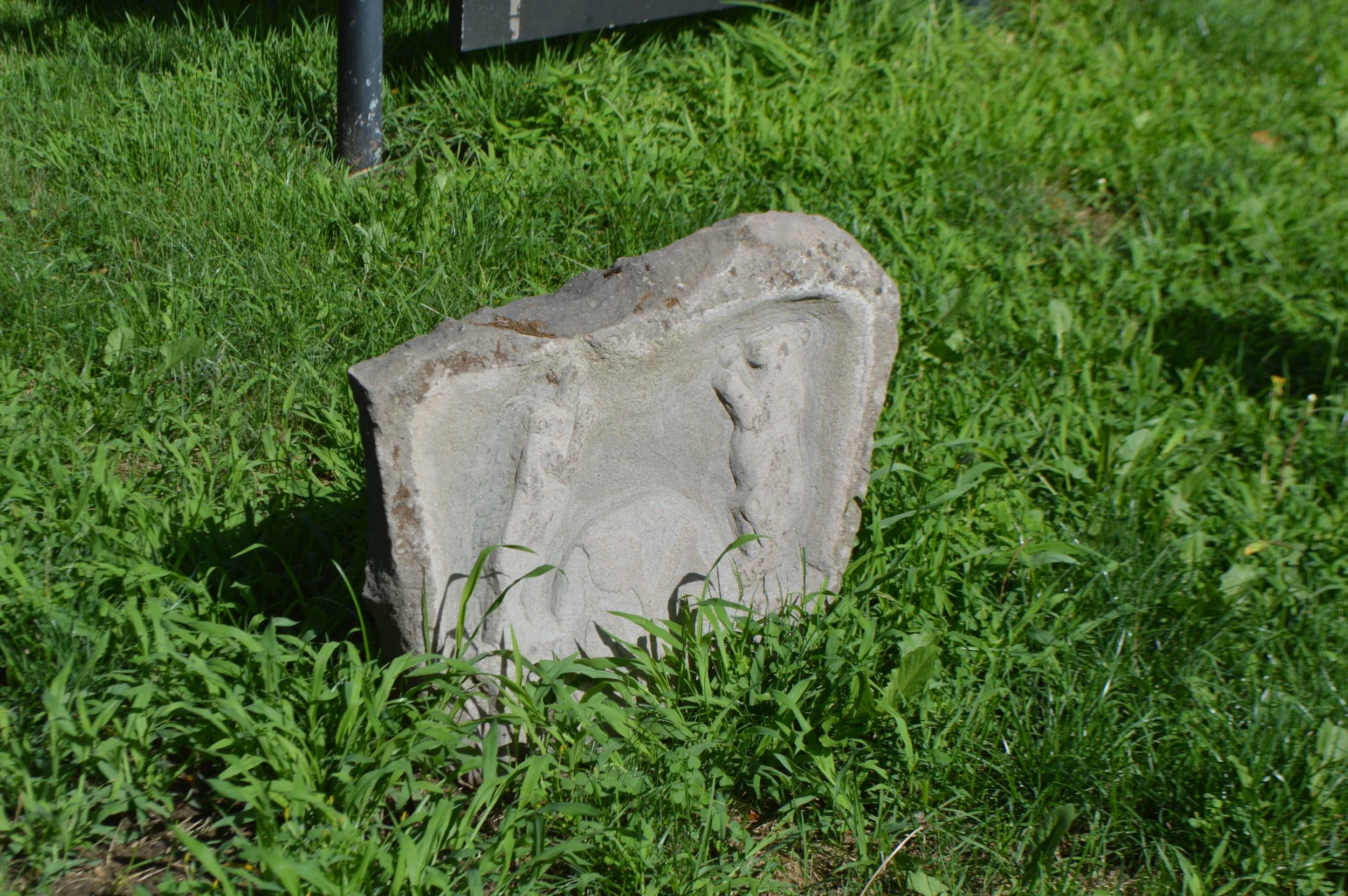
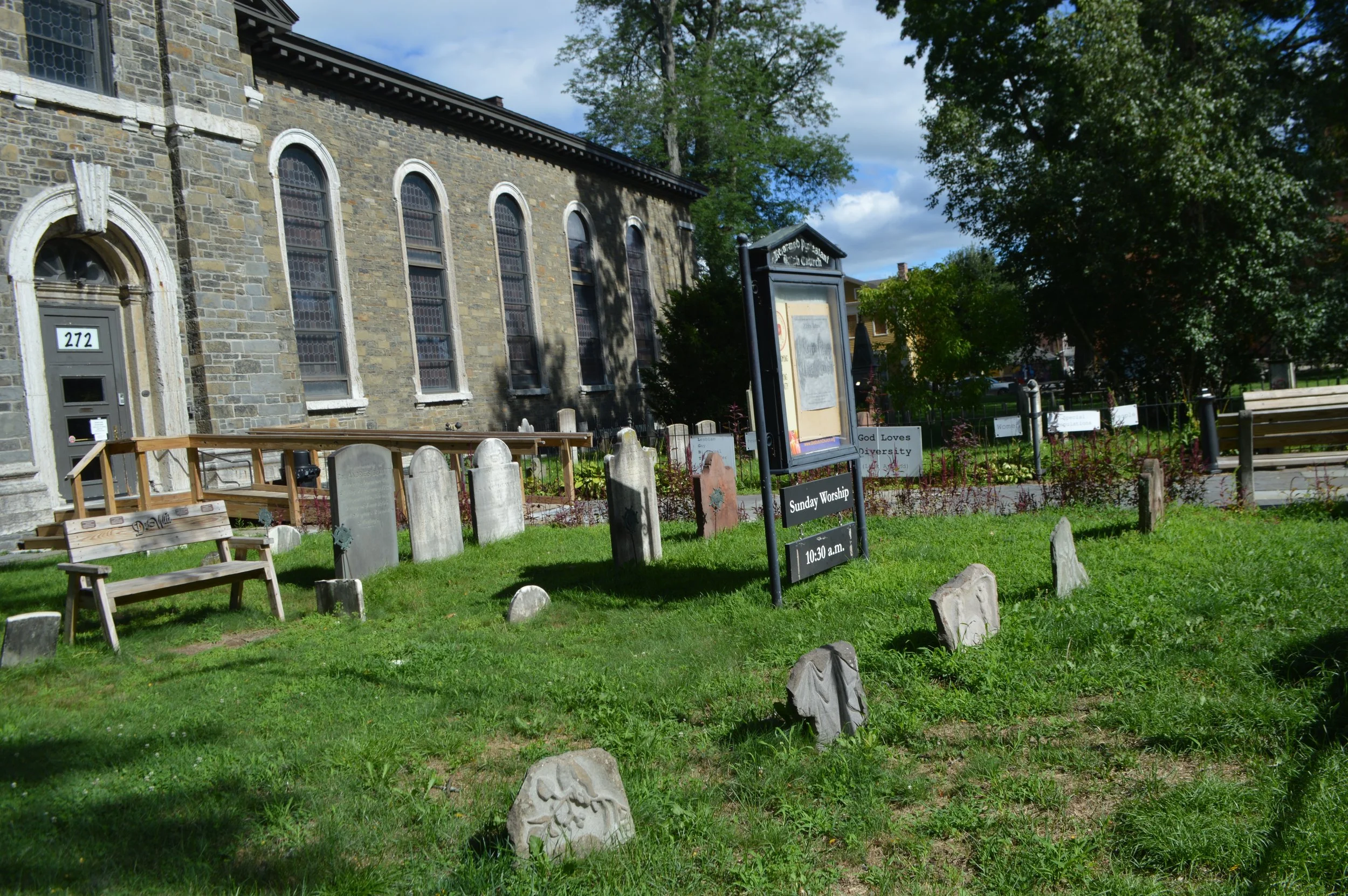
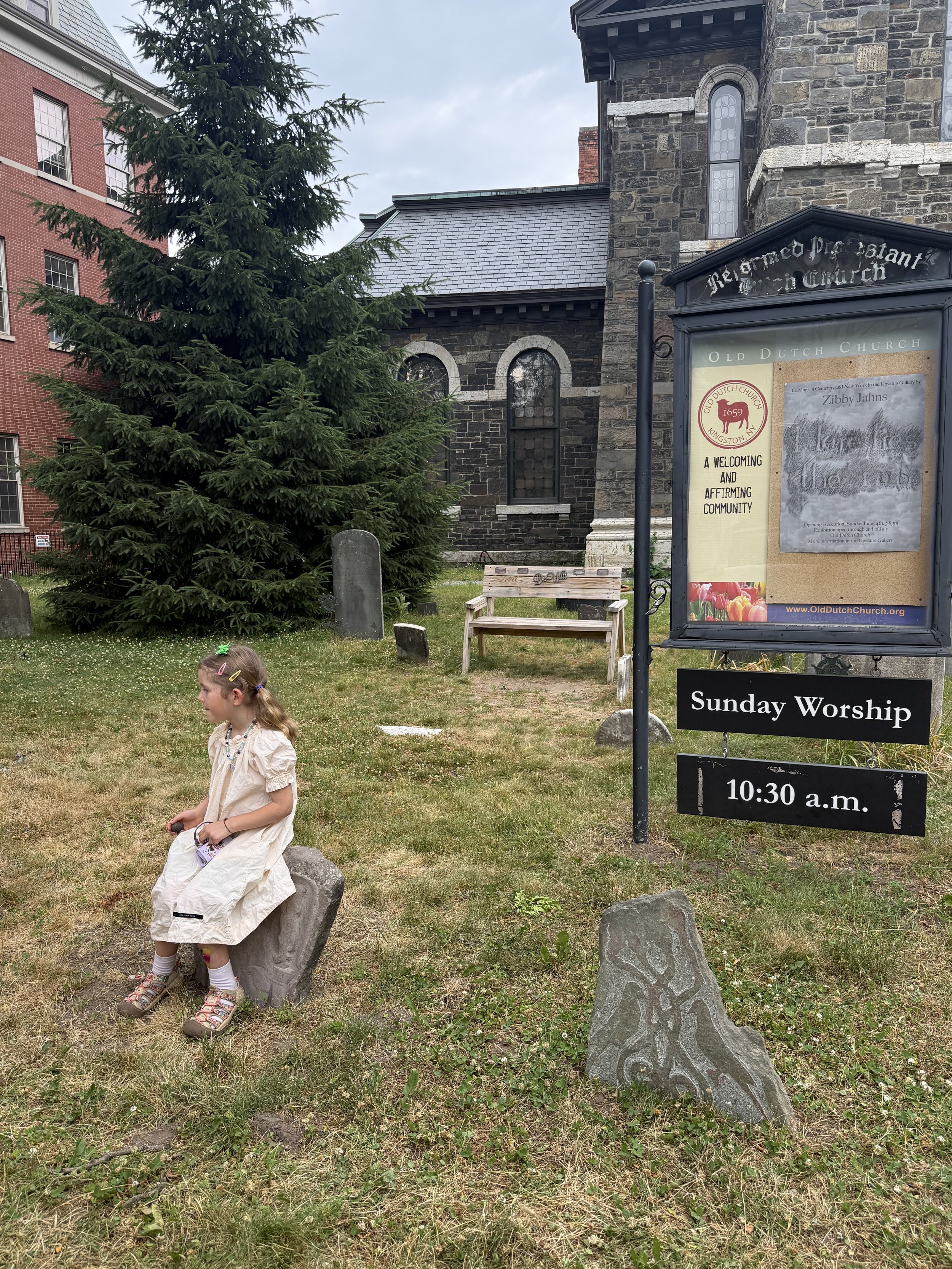
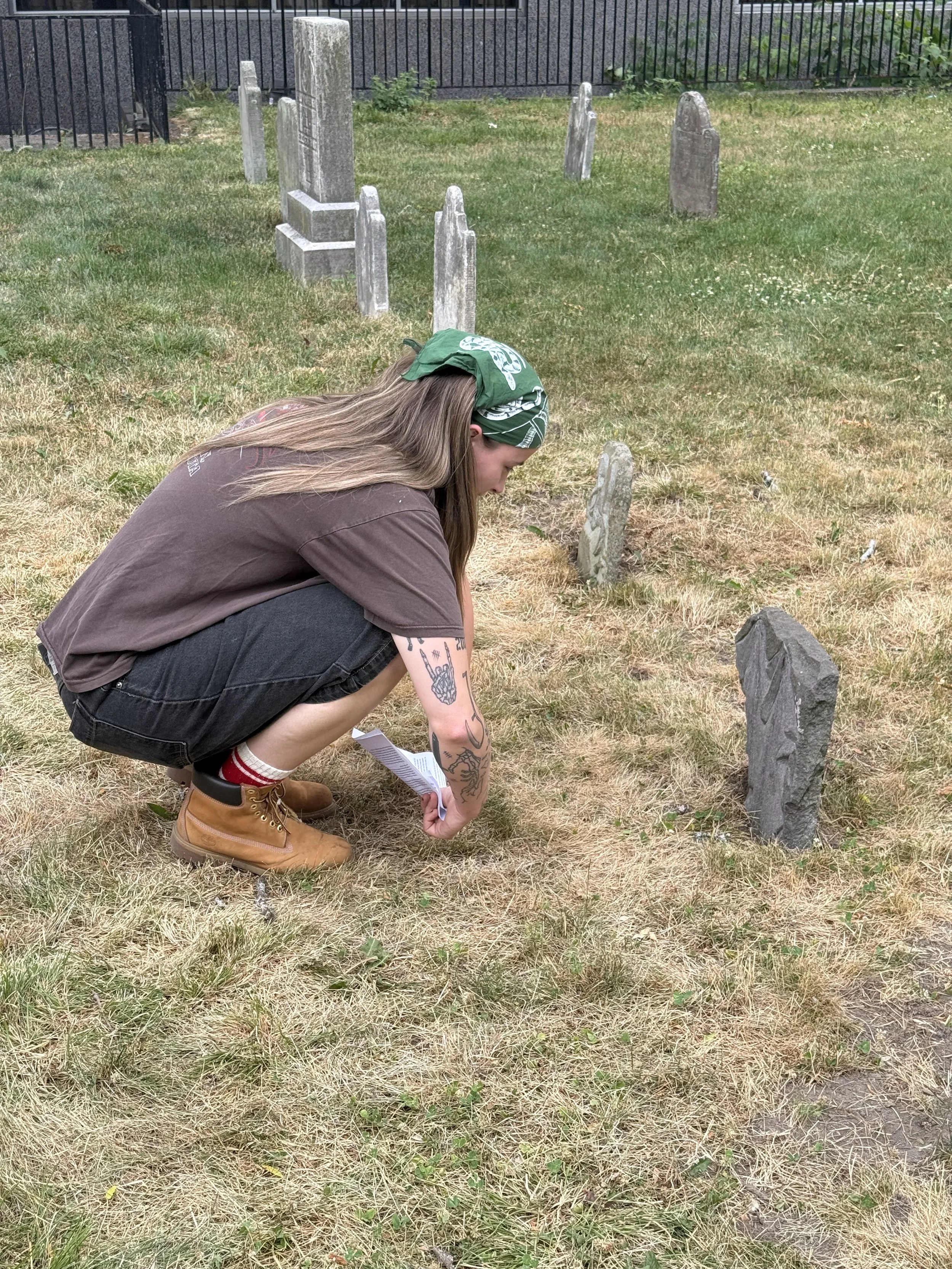
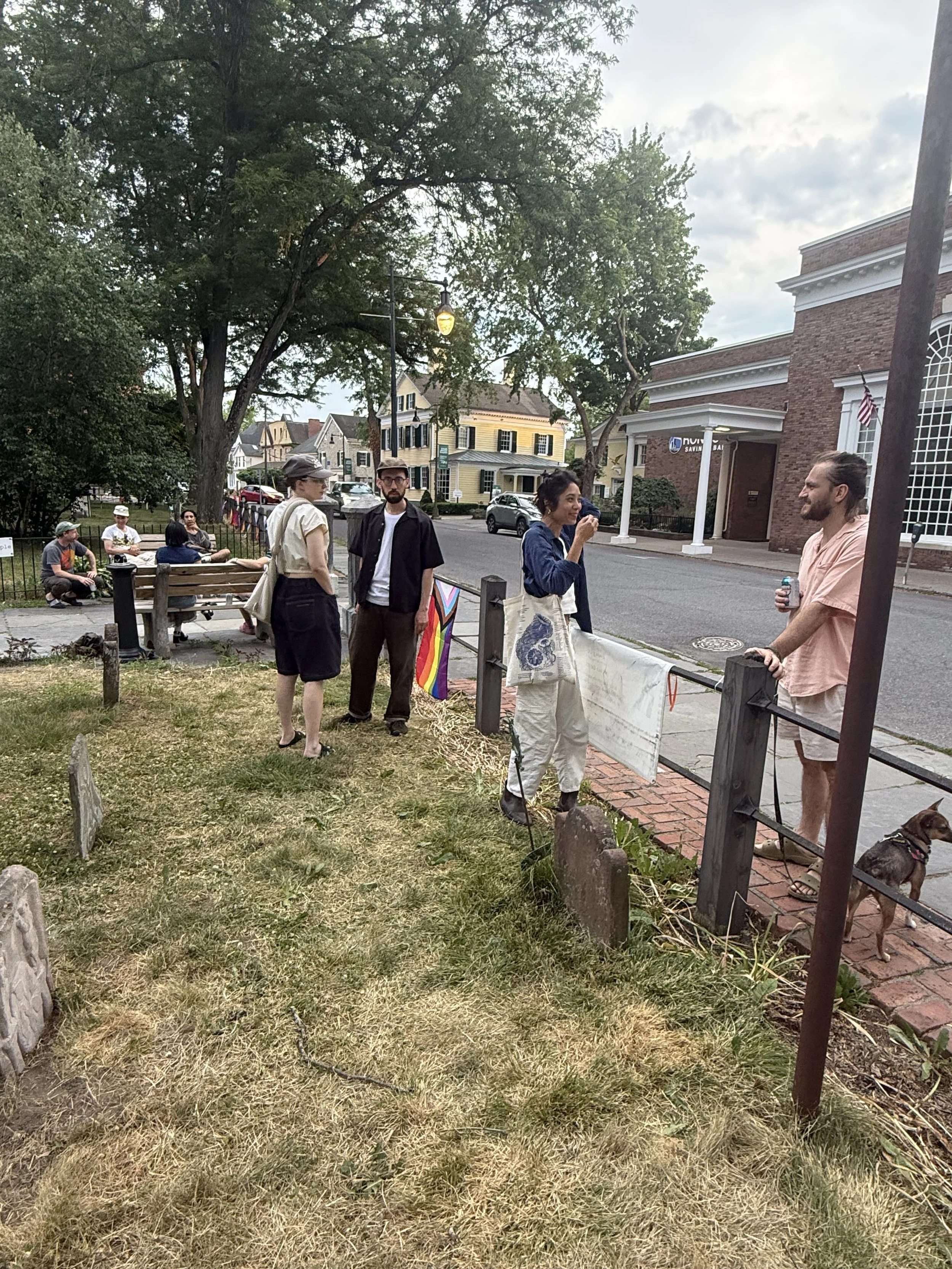
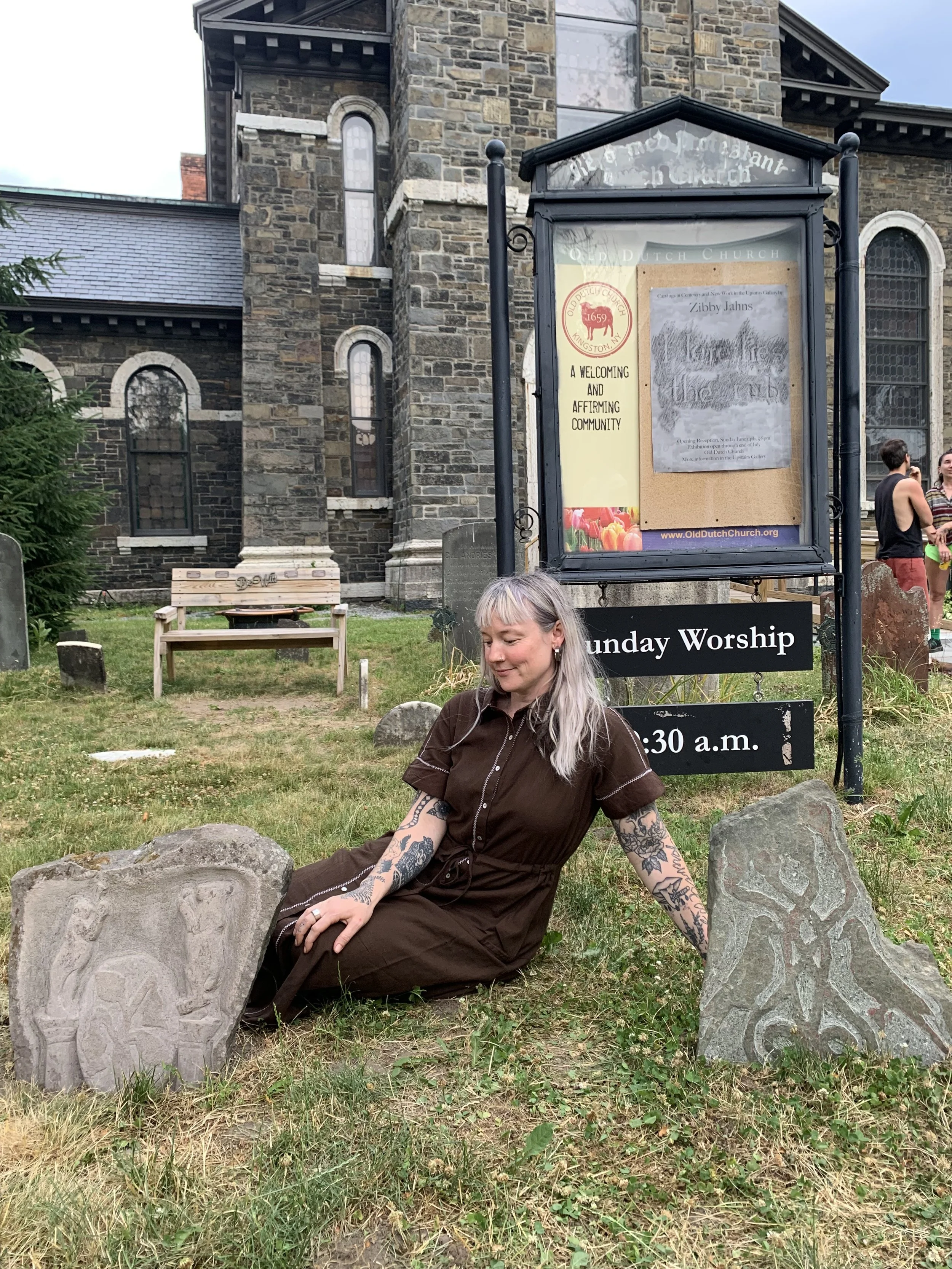
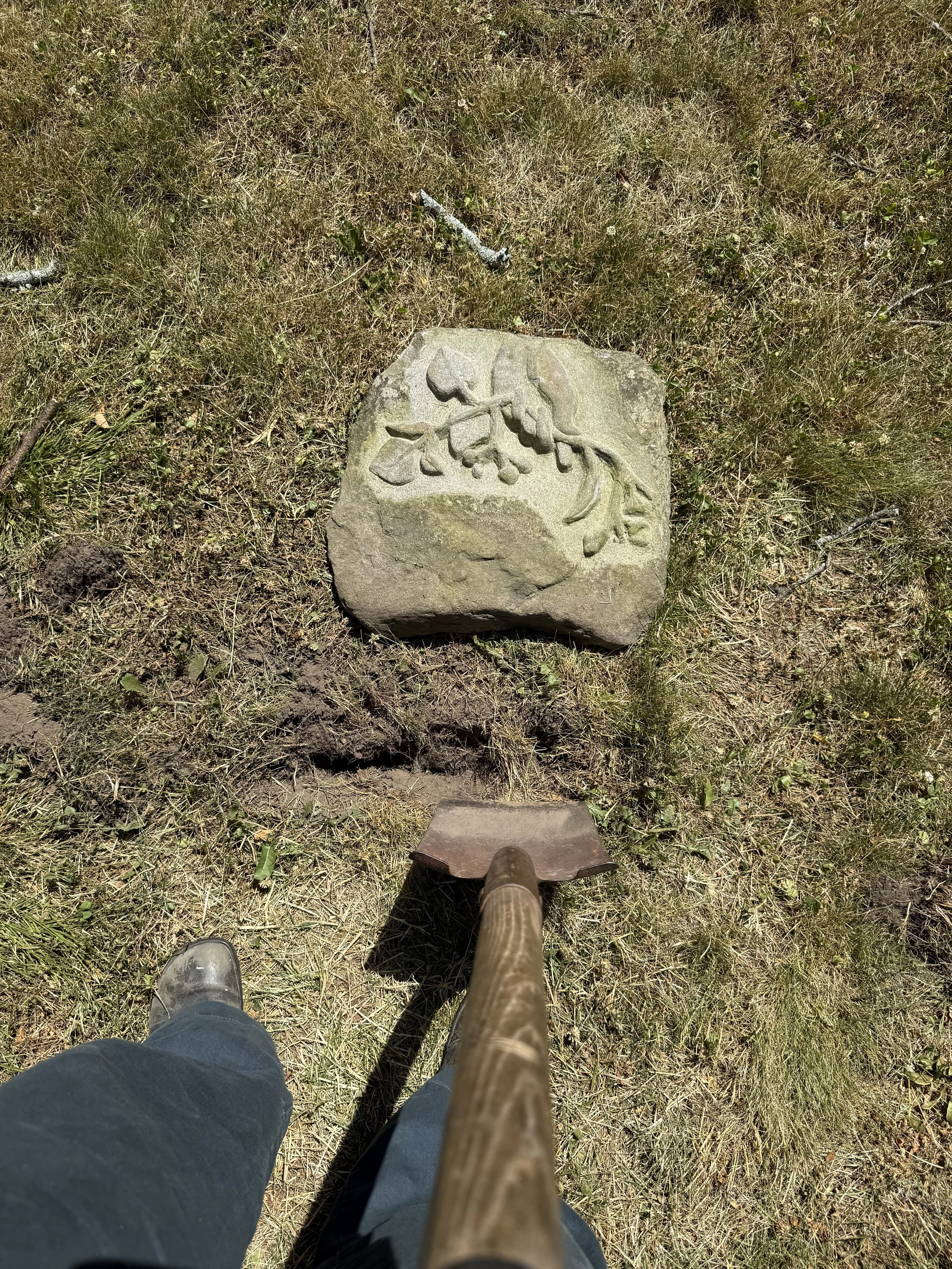
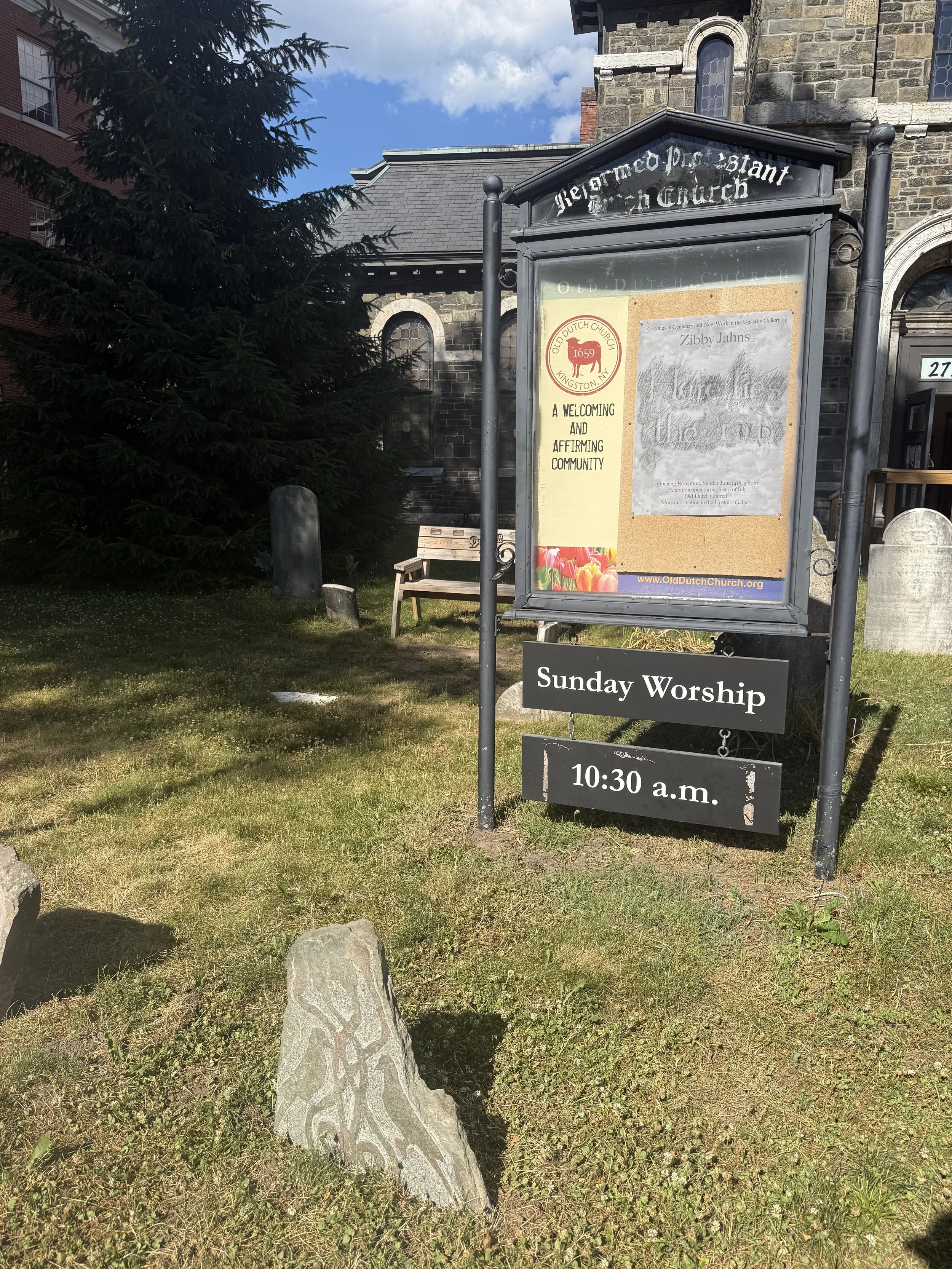
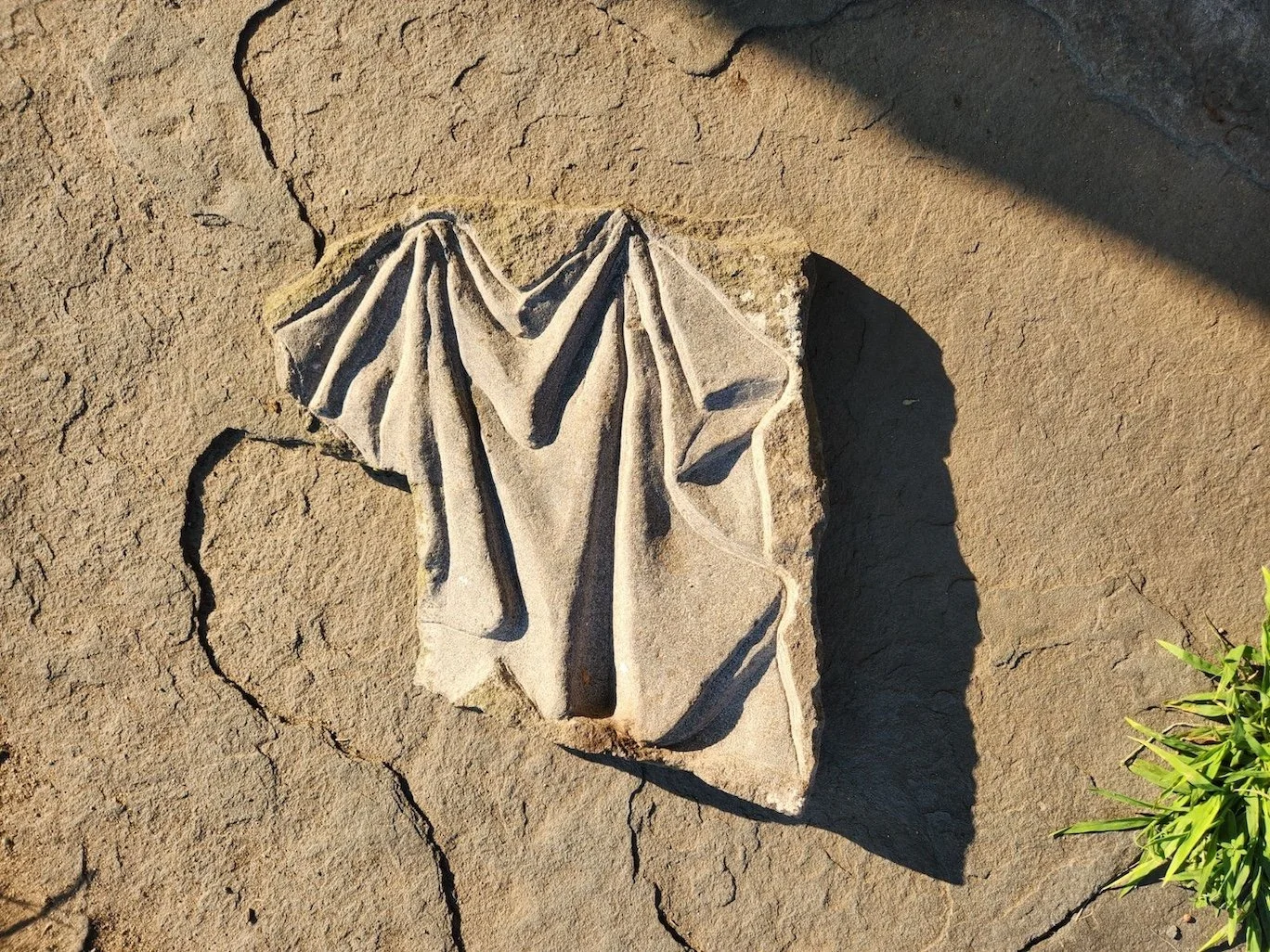
Who—or what—we mourn says more about our values than the value of those who have died. But with the scale of devastation we witness everyday, it is hard to feel a connection to the lives of our ancestors. It feels more important to grieve for every animal that goes extinct due to climate change or each child who dies by a U.S.–manufactured weapon. This exhibition is my attempt to rectify that dissonance, and bring past and present rituals around collective mourning into conversation.
The centuries-old, hand-chiseled carvings in cemeteries along the Hudson Valley are not my people: There are no headstones for my family members in this country before the 20th century. Among the hundreds of headstones outside the walls of the Old Dutch Church are four recent additions: I pulled three of the four stones from a long-gone settler house foundation in the Tannersville woods and learned to carve them. Imagining what was via the relics of what had been is a way for me to reckon with the short, violent, colonial history that decimated the ecosystems and culture of this valley over a span of a few hundred years. Each rock is 350 million years old. The designs pay homage to the creatures of the Hudson Valley who have become endangered or extinct since the creation of this cemetery, but also to connect this ecosystem to the ecosystems my ancestors may have lived in.
I look to Slavic and Jewish headstones of Eastern Europe as inspiration, and wonder what plants grew along the rocks they carved into, and how their ecosystem might be similar or different to the one I am living in now. There were so many lions on the headstones, some looking more like bears or dogs. Had my ancestors in Hungary or Ukraine seen lions in the 18th or 19th centuries? Impossible to know, but I did learn that there had been lynxes there then, just as there once had been here, until they were poached or driven into Canada.